Family Planning Association of Bangladesh

WHO WE ARE

A movement built on the belief that every individual has the right to informed choices about their own body, health, and future.

About Us

The Family Planning Association of Bangladesh (FPAB), a volunteer-led national NGO, was established in 1953 under the founding presidency of Dr. Humaira Sayeed. The association is governed by a 15-member National Executive Committee, and has been led over the decades by national figures including Alamgir M. A. Kabir, Professor Dr. Md Ibrahim, Dr. (Captain) Abul Kashem, Dr. Syed AKM Hafizur Rahman, and Meher Afroz Chumki MP, among other eminent personalities.
FPAB was founded to improve the quality of life of underprivileged communities by advocating family planning as a basic human right and promoting planned parenthood. It is the oldest and largest NGO in Bangladesh working on family planning and sexual & reproductive health, and played a key role in shaping the national family planning programme introduced in 1965. In the mid-1990s, FPAB broadened its focus from family planning alone to a holistic reproductive-health approach covering men, women and adolescents, with special attention to disadvantaged populations.

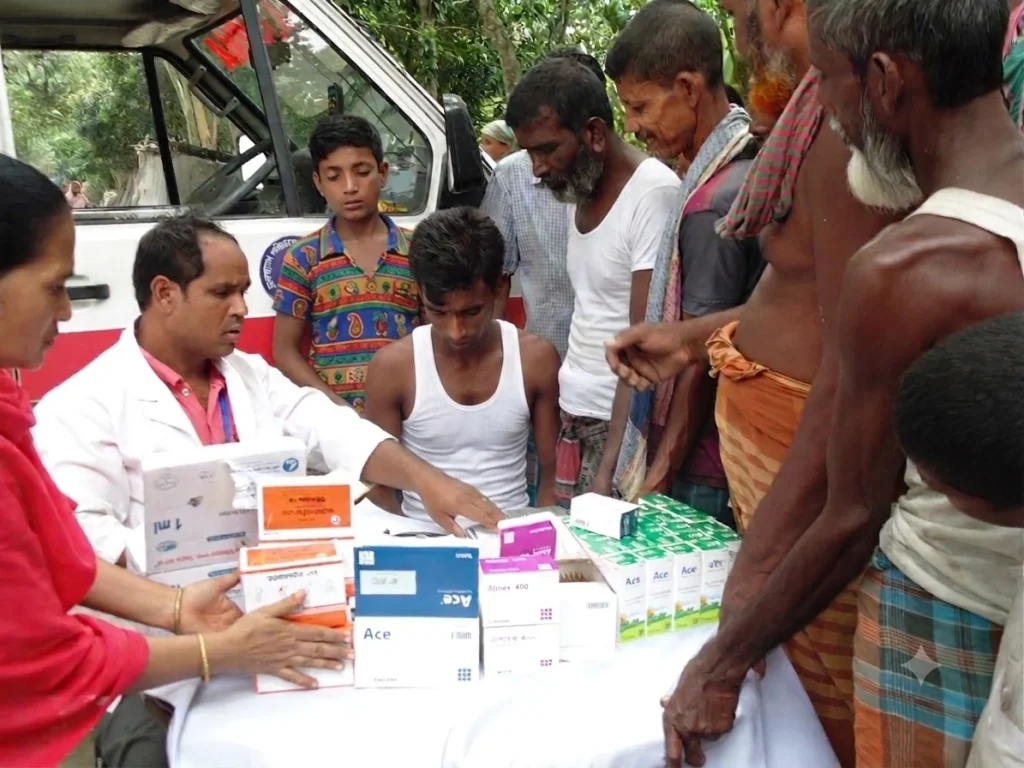
Today, FPAB delivers SRHR, FP and MNCH services as a complementary and supplementary partner to government efforts, operating across 21 districts (including 2 hill districts) through 1,761 service points — 21 static clinics, 1,000+ monthly satellite camps, and 1,260 community-based Reproductive Health Promoters (RHPs) — alongside 72 Family Planning Centres for women’s empowerment and 21 youth-friendly Tara Mela centres (since 1980).

Box with icon hover Style 4

Do you want to display your icon widget that will be more eye-catching and give an attractive hover effect? Then go for this one!

Our Vision:

A world in which every woman, man and young person has access to the information and services they need; in which sexuality is recognized both as a natural and precious aspect of all our lives and as a fundamental human right; a world in which choices are fully respected and where stigma and discrimination have no place.

Our Mission:

1. Improvement of the quality of life of individuals, especially for the poor and vulnerable people, by campaigning for sexual health and reproductive rights through advocacy and provision of the relevant services. 2. Defence of the rights of all young people to enjoy their sexual lives free from ill-health, unwanted pregnancy, violence, and discrimination. 3. Support the woman's right to choose to terminate her pregnancy legally and safely. 3. Efforts to eliminate Sexually Transmitted Infections (STIs) and eradicate HIV/AIDS. 4. Build partnerships with stakeholders to ensure the relevance of its work and to achieve organizational sustainability.

Core Values:

• Belief that sexual and reproductive rights are internationally recognized human rights that should be guaranteed to everyone.
• Commitment to gender equity and eliminating gender-based abuse and violence.
• Promotion of cultural pluralism and diversity, with respectful engagement of marginalized communities, especially youth and people living with HIV/AIDS.
• A strong belief in volunteerism as the central tenet of its activism

Strategic Approach:

1. Strengthen government commitment to SRHR, gender, and youth development through policy/legal change.
2. Empower young people and women to act on their SRH rights and make informed decisions.
3. Increase access to quality SRHR information/services for poor, marginalized, and underserved populations.
4. Strengthen FPAB's operational effectiveness and financial sustainability.

Our Vision

A world where every woman, man and young person has access to the information and services they need, and where sexuality is recognized as a fundamental human right

Our Mission

FPAB advocates for sexual health and reproductive rights, defends young people’s freedom from violence and discrimination, supports women’s right to safe reproductive choices, and works to eliminate STIs and HIV/AIDS

Gradient Color Style

Incorporate the Eye-catchy gradient in your accordion tabs with our robust accordion widget for Elementor.

Far far away, behind the word mountains, far from the countries Vokalia and Consonantia, there live the blind texts. Separated they live in Bookmarksgrove right at the coast

Far far away, behind the word mountains, far from the countries Vokalia and Consonantia, there live the blind texts. Separated they live in Bookmarksgrove right at the coast

Far far away, behind the word mountains, far from the countries Vokalia and Consonantia, there live the blind texts. Separated they live in Bookmarksgrove right at the coast

Our Strategic Approach

Four guiding pillars shape how FPAB delivers SRHR, family planning, and maternal & child health services across Bangladesh.

Policy & legal change strategy icon
01

Strengthening Government Commitment to SRHR, Gender, and Youth Development

We work to influence policy and legal reform so that sexual and reproductive health and rights (SRHR), gender equality, and youth development remain firmly on the national agenda. This includes advocating for progressive policies and legal reforms, engaging policymakers and parliamentarians, generating evidence to remove legal and structural barriers, and supporting greater budget allocation and accountability for SRHR at the national and local levels.

Youth and women empowerment strategy icon
02

Empowering Young People and Women to Claim Their SRH Rights

We equip young people and women with the knowledge, confidence, and agency to understand their sexual and reproductive health rights and make informed decisions about their own lives. This involves providing age-appropriate and accurate information, building life skills through peer education, addressing social and family-level barriers to access, and creating leadership opportunities so young people and women can advocate for themselves and their communities.

Access to SRHR services strategy icon
03

Expanding Access to Quality SRHR Information and Services for Underserved Communities

We work to ensure that poor, marginalized, and underserved populations are not left behind in accessing quality SRHR information and services. This means expanding service delivery in hard-to-reach and neglected areas, ensuring affordability and quality of care, designing tailored service models for specific groups such as refugees, disaster-affected communities, and ethnic minorities, and strengthening community-based referral systems and outreach.

Operational sustainability strategy icon
04

Strengthening FPAB's Organizational Effectiveness and Financial Sustainability

We are committed to building a stronger, more resilient organization capable of delivering lasting impact. This includes strengthening institutional capacity in human resources, management, and accountability systems, diversifying funding sources through active resource mobilization, ensuring transparent and efficient financial management, and enhancing results-based monitoring and evaluation to drive innovation and long-term self-reliance.

Understanding Family Planning and SRHR in Bangladesh

Sexual and reproductive health and rights (SRHR) cover access to services, care, information, and the ability to make informed decisions about one’s own body. Strengthening SRHR advances gender equality and helps women, adolescents and marginalized groups build healthier, more resilient communities.

Bangladesh has made measurable progress on SRHR over recent decades, driven by coordinated efforts among government agencies, NGOs such as FPAB, and international partners — contraceptive use has risen and maternal mortality has fallen, though progress varies sharply between districts and population groups.

Significant gaps remain: unmet need for contraception, adolescent pregnancy, child marriage, and unsafe abortion practices continue to affect large numbers of women and girls, particularly in urban slums and hard-to-reach rural areas — the areas where FPAB’s 1,260 Reproductive Health Promoters (RHPs) are often the only point of contact.

Gender norms and social stigma further restrict women’s autonomy over their own reproductive decisions, limiting access to contraception, safe MR/PAC services, and comprehensive sexuality education — a gap FPAB addresses directly through its adolescent-friendly Tara Mela centres and school/community CSE programming.

Bangladesh’s large adolescent and youth population makes adolescent SRHR a national priority; early marriage, low awareness, and limited adolescent-friendly services remain persistent barriers that FPAB’s youth clubs, peer education and life-skills programming are designed to address.

Climate vulnerability compounds these challenges — cyclones, floods and coastal erosion regularly disrupt health-service delivery, especially across FPAB’s coastal and hill-district branches (e.g., Cox’s Bazar, Rangamati), which is why FPAB’s humanitarian SRHR response in Cox’s Bazar and Bhasanchar remains a core part of its work.

As Bangladesh’s oldest and largest NGO working on family planning and SRHR, FPAB plays a central role alongside government and international partners: providing direct services, raising community awareness, and advocating for stronger SRHR policy and legal protection nationwide. In short — Bangladesh’s SRHR landscape combines real progress with persistent structural gaps, and FPAB’s 64+ year, 21-district network exists precisely to reach the populations mainstream systems still struggle to serve.